
Updated
There is no single cleaning interval for every commercial building. The Clean Space suggests four to twelve weeks for many sites, with busy entrances cleaned more often. That is one supplier's starting point: adjust it to how quickly each area gets dirty and the standard you need to maintain.
Lobby windows, upper-floor glass and internal partitions rarely receive the same dirt or attention. A window cleaning schedule split by area lets you increase visits where they're needed without paying to clean the whole building more often.
Is there a standard window cleaning frequency?
Commercial window cleaning contracts can be organised weekly, monthly, quarterly or around particular events. The useful question is whether the proposed interval keeps each area at the required condition. A retail frontage and a sheltered upper-floor elevation have different exposure and visibility.
What affects commercial window cleaning frequency?
The condition of the glass between visits
Record where visible grime, fingerprints or deposits appear and how soon they return. Take comparison photographs from the same safe viewing positions. Note the date of the last clean and any unusual event, such as nearby construction work, that could affect the observation.
If windows still look satisfactory before the next planned visit, discuss whether the interval remains appropriate. If they deteriorate well beforehand, consider a shorter interval or a different specification. Check first whether the marks are surface dirt that cleaning can address.
The location of your building
Nearby traffic, construction, trees and exposed elevations can affect how quickly windows need to be cleaned. A commercial window cleaner should inspect the different sides of the property before proposing one frequency for all of them. Localised dirt and grime may justify a shorter interval on one elevation.
Seasonal observations can be useful. Pollen, leaf debris or a particular pattern of staining may prompt a targeted visit. Record the problem and the result of the clean so the next year's schedule has a factual basis.
Building use and presentation
Entrance glass contributes to a visitor's first impression of an office building or shop. Fingerprints and splashes are conspicuous at eye level, even when the upper floors still look clean. Include the tenant's presentation requirements in the specification so the cleaning company knows which areas need the most frequent attention.
Define the cleaning service by area and finish: glass, frames, sills and the treatment of missed panes or residue. For retail stores, the frontage may be the priority; an office may have different requirements for reception glass and upper floors. Window cleaning services should price that distinction explicitly.
Set separate schedules for interior and exterior windows
Ask for a schedule by area. Ground-floor entrance doors may be covered by a regular cleaning team, while upper-floor windows require specialist access. Internal partitions, meeting-room glass and atrium glazing may need their own arrangements.
A window washing record can be simple. The example below shows the information to collect; it deliberately leaves the cleaning interval for the site assessment.
| Zone | Condition to record before a visit | Schedule decision |
|---|---|---|
| Entrance and lobby glass | Fingerprints, splashes and visibility from the entrance | Whether the agreed presentation standard lasts until the next clean |
| Upper-floor exterior windows | Dirt, deposits and any differences between elevations | Whether all elevations need the same interval |
| Internal glass | Marks, residue and areas already covered by routine cleaning | Whether a separate visit is needed |
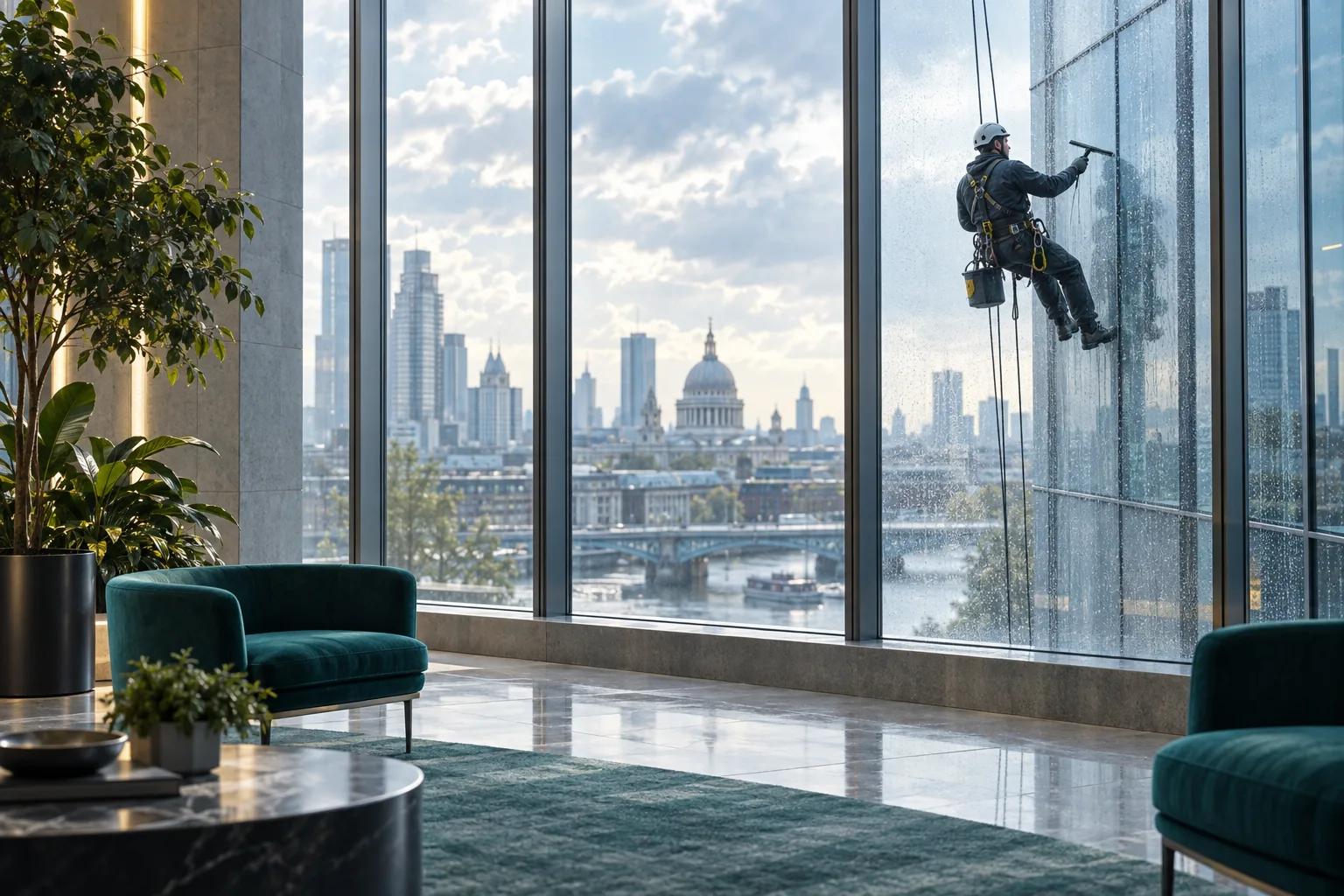
For high-level external glazing, review rope access window cleaning alongside other suitable methods. An existing cradle or safe internal cleaning arrangement may affect how the work is organised.
Compare commercial window cleaning services and costs
Ask the contractor to price the proposed schedule rather than assuming a discount. A recurring arrangement may change the provider's planning and scope, but the price depends on its quotation. Compare annual costs as well as charges per visit.
Separate the first clean from ongoing maintenance if the initial condition needs additional work. Confirm whether that extra work is included once or repeated at every visit. Also ask how a postponed visit is rescheduled and whether access problems lead to additional charges.
Keep comparisons consistent: the same elevations, internal or external scope, reporting and working-hour restrictions. Our rope access pricing guide explains why a day rate alone isn't a project price.
Plan access around the building's use
Professional window cleaning at height needs a suitable access plan each time the work is undertaken. A recurring contract doesn't remove the need to consider changed site conditions. Tell the contractor about new building work, alterations to roof access or changes to pedestrian routes.
HSE's guidance identifies site conditions, weather and the extent and frequency of access as relevant planning factors. Coordinate visits with occupants so necessary working areas and access permissions are available.
Do commercial windows need cleaning at least twice a year?
“At least twice a year” is common advice, but it isn't a reliable minimum for every commercial property. Windows that remain satisfactory may need less frequent attention; a busy shopfront may need much more. Record the condition before the next clean and use that evidence to decide whether the interval works.
Is there a best time of year for window cleaning?
Plan visits around the building's condition and safe working weather. A clean after nearby construction finishes may be more useful than one tied to a season. Where pollen or other deposits recur, previous records can help you choose the timing. Confirm how weather postponements will be rescheduled so the agreed programme remains workable.
Review your window cleaning schedule
At a review, compare the agreed specification with the completion records. Note missed or inaccessible areas, complaints, changes in appearance and any extra visits. Ask the contractor to explain recurring exclusions rather than accepting them as part of the routine.
Use the review to retain, shorten or lengthen each interval. Record the reason and compare the resulting annual price. A recurring mark that survives cleaning needs investigation before you pay for more frequent visits to remove it.
Request a programme for your building
Request a cleaning programme with the building address, current frequency and areas that need attention. Industrial Abseilers can introduce a suitable contractor, subject to availability. The cleaning contractor assesses the site and proposes the schedule and price.