Skip to content

Waterproofing & Sealing

Request a contractor introduction for waterproofing and sealing at height, including failed joints and suspected facade leaks.

Tell us about your project

Tell us what you need.

Waterproofing. Free to enquire, with no obligation.

We’ll use your information to respond to this message. Privacy details.

We check contractor availability for your project. The contractor assesses the work and provides your quote.

What do you need help with?

  • Water ingress around windows or facade joints
  • Deteriorated sealant and movement joints
  • A suspected leak needing investigation

Is it suitable for your building?

Residential and commercial facades with external joints or seals needing attention. Finding the entry point comes before choosing a repair or coating system.

Your contractor will assess whether rope access is suitable for the work and site.

Plan the work around your building.

Water ingress may come from failed joints, roof details or other defects. Rope access can provide access for investigation and targeted treatment on suitable buildings. Establish the source before specifying sealing or coatings.

Access, preparation and project details

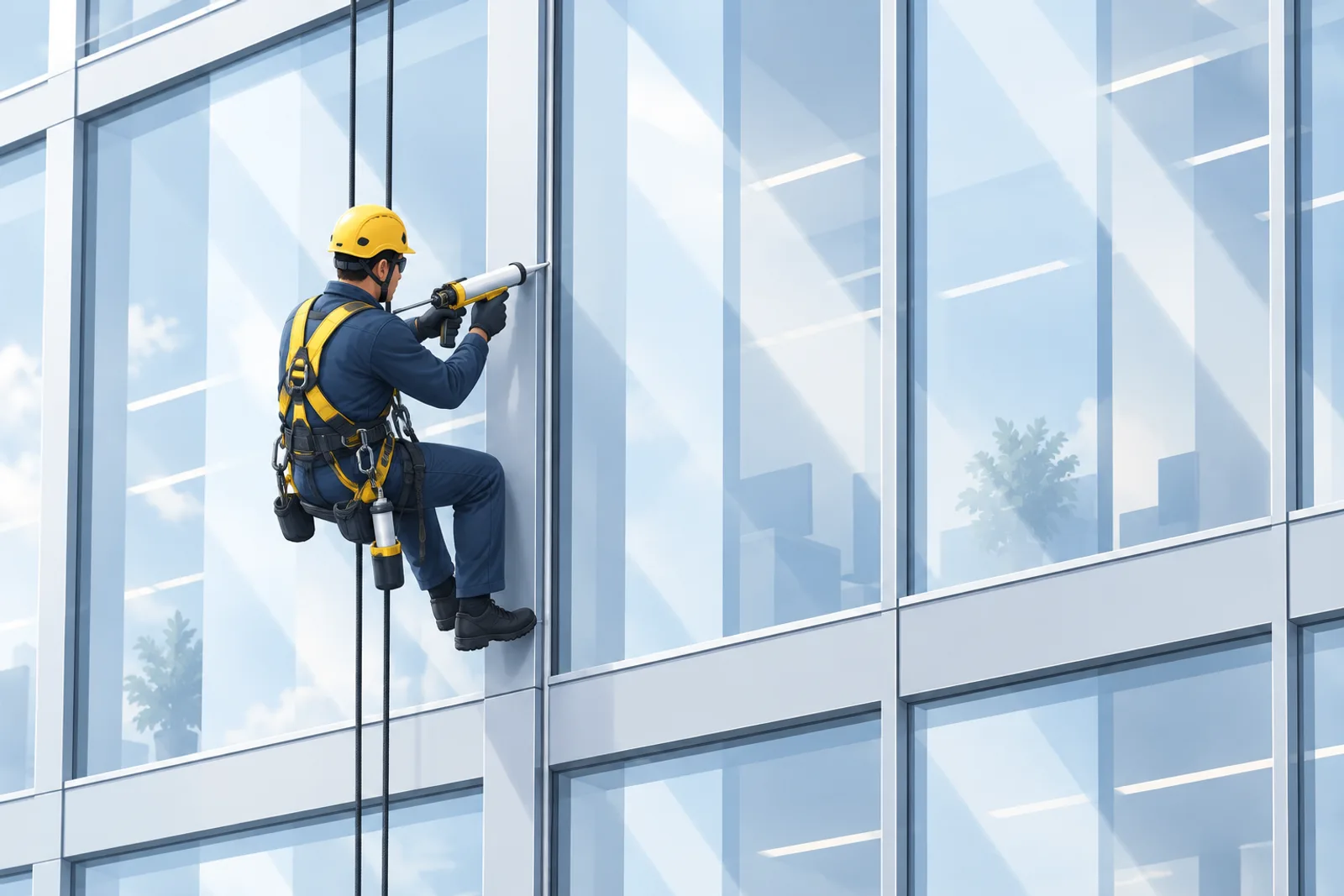
Common waterproofing tasks carried out by rope access include resealing expansion joints, replacing failed mastic around windows and curtain walling, applying hydrophobic and water-repellent coatings to masonry and concrete, sealing cracks and movement joints, treating spalled concrete, and repairing or replacing failed tanking and parapet detailing. The ability to work at close quarters with the building fabric means that technicians can identify and address the specific points of water ingress rather than over-treating a whole elevation.

Diagnosing water ingress is rarely straightforward: water can travel a long way between where it enters and where it shows up inside. A rope access technician can inspect the facade methodically — testing each joint and seal, checking sealant adhesion, and looking for cracks, failed pointing, and defective flashings — to build an accurate picture of where the water is actually getting in before any sealing work is specified.

Rope access is particularly effective for waterproofing work because the treatment often needs to be applied from the outside of the building, at the point where water is entering. Technicians can systematically work across a facade, testing each joint and seal, and carrying out targeted repairs as they go, controlling the sequence so that newly sealed areas are not disturbed by later work above them.

A diagnostic survey should establish the likely source of water ingress before a repair is specified. Ask about experience with the relevant waterproofing system, rope access competence, insurance and the limitations of any proposed treatment.

How the work is planned

  1. Diagnostic survey

    Ask the contractor to investigate the likely source of ingress and explain any limits to the inspection. Agree the testing and evidence needed before choosing a repair.

  2. Method statement & RAMS

    A risk assessment and method statement covers rigging, the sealing system, weather limits for application and curing, and exclusion zones.

  3. Preparation

    Failed mastic and defective sealant are raked out, joints cleaned, and surfaces prepared so new sealant or coating bonds correctly.

  4. Sealing & coating

    Joints are resealed, mastic renewed, cracks treated, and hydrophobic or tanking systems applied at the points of ingress, sequenced top-down.

  5. Verification & report

    Work is checked and recorded, with a photo report of the treated areas and recommendations for monitoring or further work if needed.

From enquiry to introduction

  1. 1. Tell us about the work

    A few details about your building

    Share the location, the work required and when you’d like it done.

  2. 2. We check for a suitable match

    The right service and coverage

    We check your request with a contractor who may be able to help. Availability depends on the project.

  3. 3. Discuss your quote

    Speak directly with the contractor

    The contractor discusses the scope and any site visit needed. You decide whether to proceed.

Guides for planning the work

Waterproofing questions

Why is finding the source of a leak so difficult?

Water can travel between its entry point and the place it appears inside. An inspection may involve joints, seals, cracks and flashings, but the source may need further testing or opening-up. Ask the contractor to explain the findings and any remaining uncertainty.

What waterproofing work can be done on rope access?

Resealing expansion joints, renewing failed mastic around windows and curtain walling, sealing cracks and movement joints, applying hydrophobic coatings to masonry and concrete, treating spalled concrete, and repairing parapet and tanking detailing — all applied externally at the point where water is getting in.

Why treat water ingress from the outside?

The most reliable fix is usually at the point of entry, on the external face, rather than managing the symptoms inside. Rope access reaches those high, awkward points of entry directly, so the defect itself is sealed rather than the internal damage simply being patched.

Do you survey before quoting for waterproofing?

Ask what investigation is needed before a repair can be specified and priced. The contractor should explain the likely source, limits of the diagnosis and any further testing. Agree investigation costs separately from treatment where appropriate.

Waterproofing in your area

Tell us what your building needs.

Share the address and project details. We’ll check who can help.

Send an enquiry
Enquire about this service