
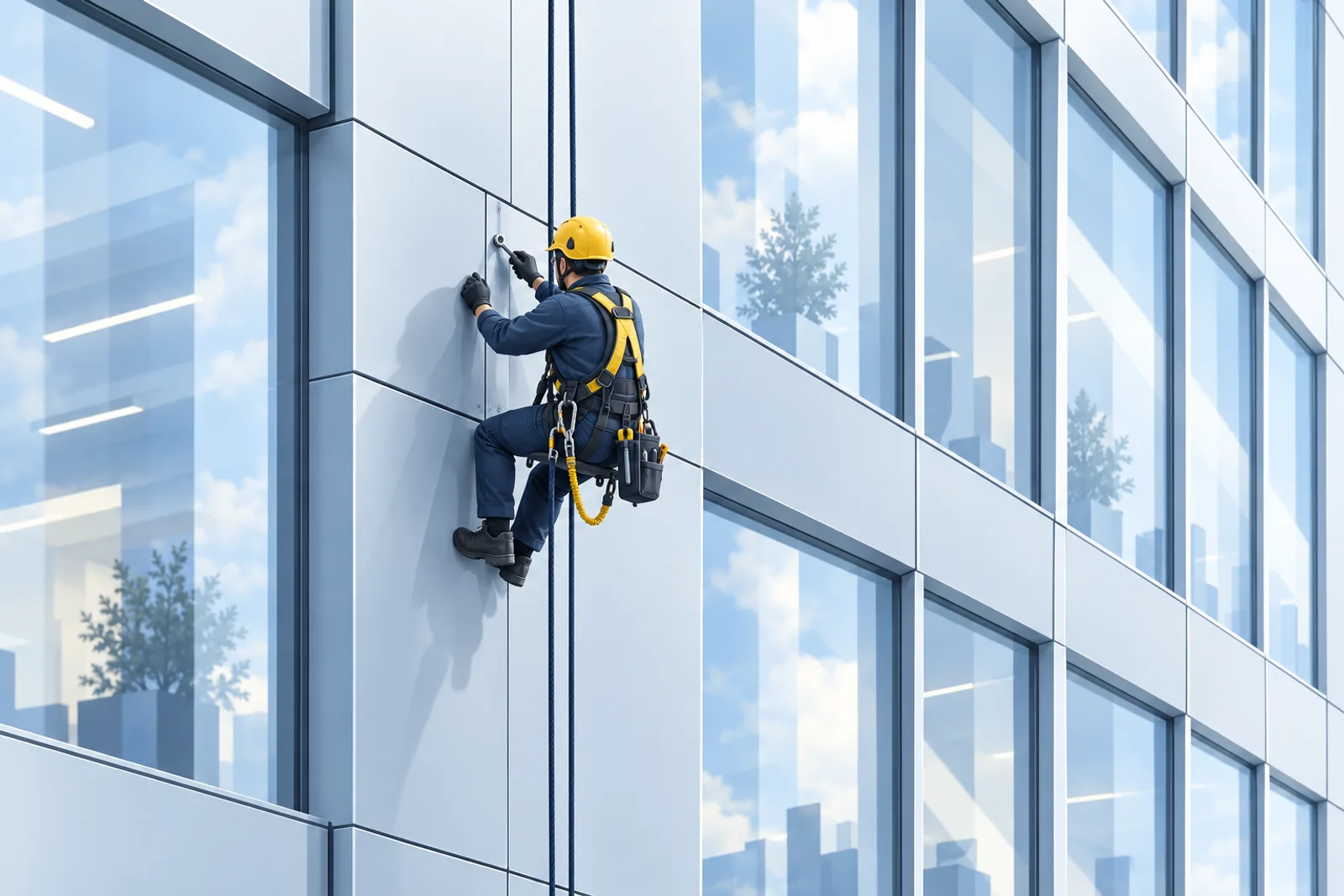
Cladding Installation & Repair
Enquire about cladding repairs, installation or panel replacement at height. Share the building details and specification so we can check for a suitable contractor.
Tell us about your projectTell us what you need.
Cladding in Bolton. Free to enquire, with no obligation.
We check contractor availability for your project. The contractor assesses the work and provides your quote.
What do you need help with?
- Damaged panels or loose trims
- Failed joints around cladding
- Access needed to inspect fixings or wall build-up
Is it suitable for your building?
Buildings with rainscreen or other cladding systems. Panel size, weight, fixings and any structural or fire-safety specification determine the suitable access and handling method.
Your contractor will assess whether rope access is suitable for the work and site.
From enquiry to introduction
- 1. Tell us about the work
A few details about your building
Share the location, the work required and when you’d like it done.
- 2. We check for a suitable match
The right service and coverage
We check your request with a contractor who may be able to help. Availability depends on the project.
- 3. Discuss your quote
Speak directly with the contractor
The contractor discusses the scope and any site visit needed. You decide whether to proceed.
Cladding questions
Can a single damaged cladding panel be replaced without full scaffolding?
It may be possible for an isolated panel where its weight, size and fixings can be managed safely. The contractor should assess the panel, support arrangements and replacement specification before selecting the access equipment.
Is rope access suitable for post-Grenfell cladding remediation?
It depends on the specified work, panel handling and building conditions. Ask the appointed design and assessment professionals to confirm the scheme requirements, then have the access contractor assess how the work can be carried out. Rope access certification alone does not establish design or fire-safety competence.
What cladding types can be worked on?
Tell the contractor the panel material, dimensions and fixing system, and share any existing survey. They should assess the particular system and proposed work rather than assume every cladding type can be repaired by rope access.
Can you inspect what's behind the cladding?
Yes. Removing panels lets technicians inspect carrier rails, brackets, fixings, the breather membrane, and cavity barriers — useful for both targeted repairs and fire-safety assessments. Findings are recorded and the cladding reinstated or replaced as specified.
Cladding in your area
Tell us what your building needs.
Share the address and project details. We’ll check who can help.