
Skip to content

Rope Access Painting & Protective Coatings

Get matched with rope access painters for protective coating application at height — from masonry paint to high-performance anti-corrosion systems.

Tell us about your project

Tell us what you need.

Painting in Stockport. Free to enquire, with no obligation.

We’ll use your information to respond to this message. Privacy details.

We check contractor availability for your project. The contractor assesses the work and provides your quote.

What do you need help with?

  • Weathered or peeling external paint
  • Surfaces requiring preparation and recoating
  • Protective finishes specified for exposed areas

Is it suitable for your building?

Commercial and residential facades, concrete structures and steelwork. The substrate, existing finish and proposed coating specification determine the preparation and application needed.

Your contractor will assess whether rope access is suitable for the work and site.

Plan the work around your building.

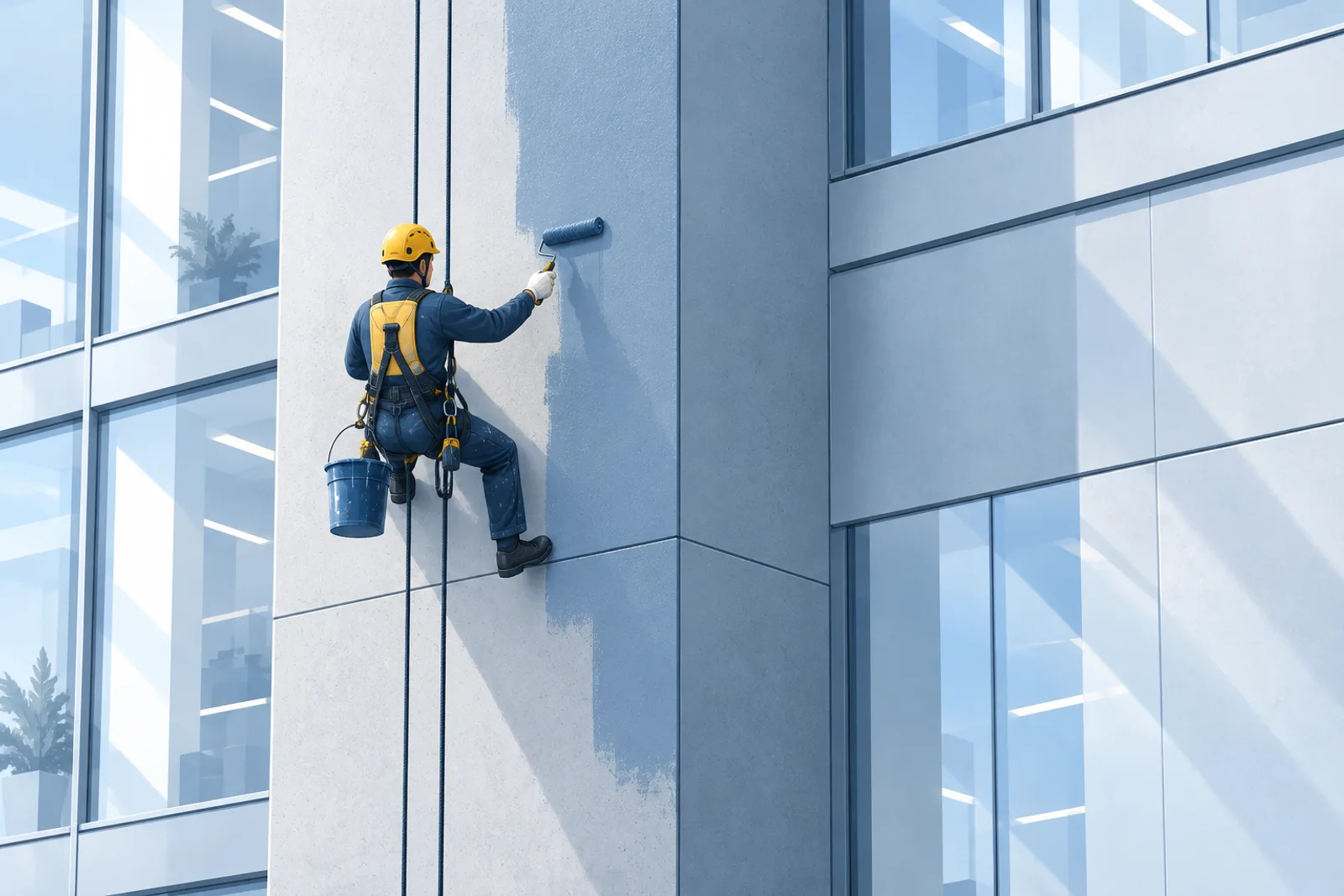
Applying paint and protective coatings to building exteriors at height is one of the most common applications of rope access. Whether the project involves repainting a rendered facade, applying anti-corrosion coatings to structural steelwork, or treating concrete with waterproof sealants, rope access painting provides a practical and economical alternative to scaffolding. The same approach is used on tower blocks, industrial structures, bridges, and feature elevations where temporary access would be disproportionately expensive.

Access, preparation and project details

The key advantage of rope access for painting and coating work is the ability to cover large surface areas quickly without the overhead cost of temporary access structures. Technicians work in a controlled descent, applying coatings systematically from top to bottom, which also happens to be the optimal direction for preventing runs and drips. Good preparation is as important as application: surfaces are cleaned, defective coatings removed, and substrates primed before the finish coat goes on, all from rope.

Stairwells, atriums and bridge undersides can present difficult access. The contractor should assess the work area and agree ground controls, exclusion zones and protection for nearby surfaces. Entrances and footpaths may need restrictions while work takes place.

Coating systems vary widely — standard masonry and elastomeric paints, anti-carbonation coatings for concrete, two-pack epoxy and polyurethane systems for steel, and intumescent or anti-graffiti coatings for specialist applications. Each has its own surface-preparation, mixing, application, and curing requirements. Getting these right is essential, because incorrect application can void the manufacturer's warranty and shorten the life of the coating.

Ask for experience with the coating system and substrate, plus a specification covering preparation, application and curing conditions. Check rope access competence and insurance for the proposed work. Masonry paints, epoxy and polyurethane systems have different preparation and environmental requirements.

How the work is planned

  1. Survey & substrate check

    The provider assesses the surface, the existing coating, and the substrate to specify preparation and the correct coating system for the conditions.

  2. Method statement & RAMS

    A risk assessment and method statement covers rigging, containment of overspray and debris, exclusion zones, and the manufacturer's application specification.

  3. Surface preparation

    Surfaces are cleaned, defective coatings removed, repairs made, and substrates primed — preparation that determines how long the finish lasts.

  4. Coating application

    Technicians apply coats top-to-bottom in a controlled descent, working within the manufacturer's temperature, humidity, and recoat windows.

  5. Inspection & sign-off

    Agree the finish checks and application records with the contractor, including any documentation required by the coating supplier for a warranty.

From enquiry to introduction

  1. 1. Tell us about the work

    A few details about your building

    Share the location, the work required and when you’d like it done.

  2. 2. We check for a suitable match

    The right service and coverage

    We check your request with a contractor who may be able to help. Availability depends on the project.

  3. 3. Discuss your quote

    Speak directly with the contractor

    The contractor discusses the scope and any site visit needed. You decide whether to proceed.

Painting questions

What types of coating can be applied by rope access?

Most exterior systems: masonry and elastomeric paint, anti-carbonation coatings for concrete, two-pack epoxy and polyurethane for structural steel, and specialist intumescent or anti-graffiti coatings. The provider matches the system to the substrate and the building's exposure.

Why apply coatings from top to bottom?

Working downwards in a controlled descent is the natural direction for rope access and is also the best way to prevent runs and drips onto finished work. It lets a technician keep a wet edge and apply an even film across each section.

Can painting be carried out in any weather?

No. Most coatings have minimum and maximum temperature and humidity limits for application and curing, and rope access itself is suspended in high winds, rain, or icy conditions. A good provider builds these limits into the method statement and schedules around the forecast to protect both safety and the finish.

Will the work keep the manufacturer's warranty valid?

Ask the contractor and coating supplier to confirm the warranty conditions before work begins. Agree the specification, application records and any inspection required. A warranty should not be assumed from the access method alone.

Painting in your area

Tell us what your building needs.

Share the address and project details. We’ll check who can help.

Send an enquiry
Enquire about this service