
Updated
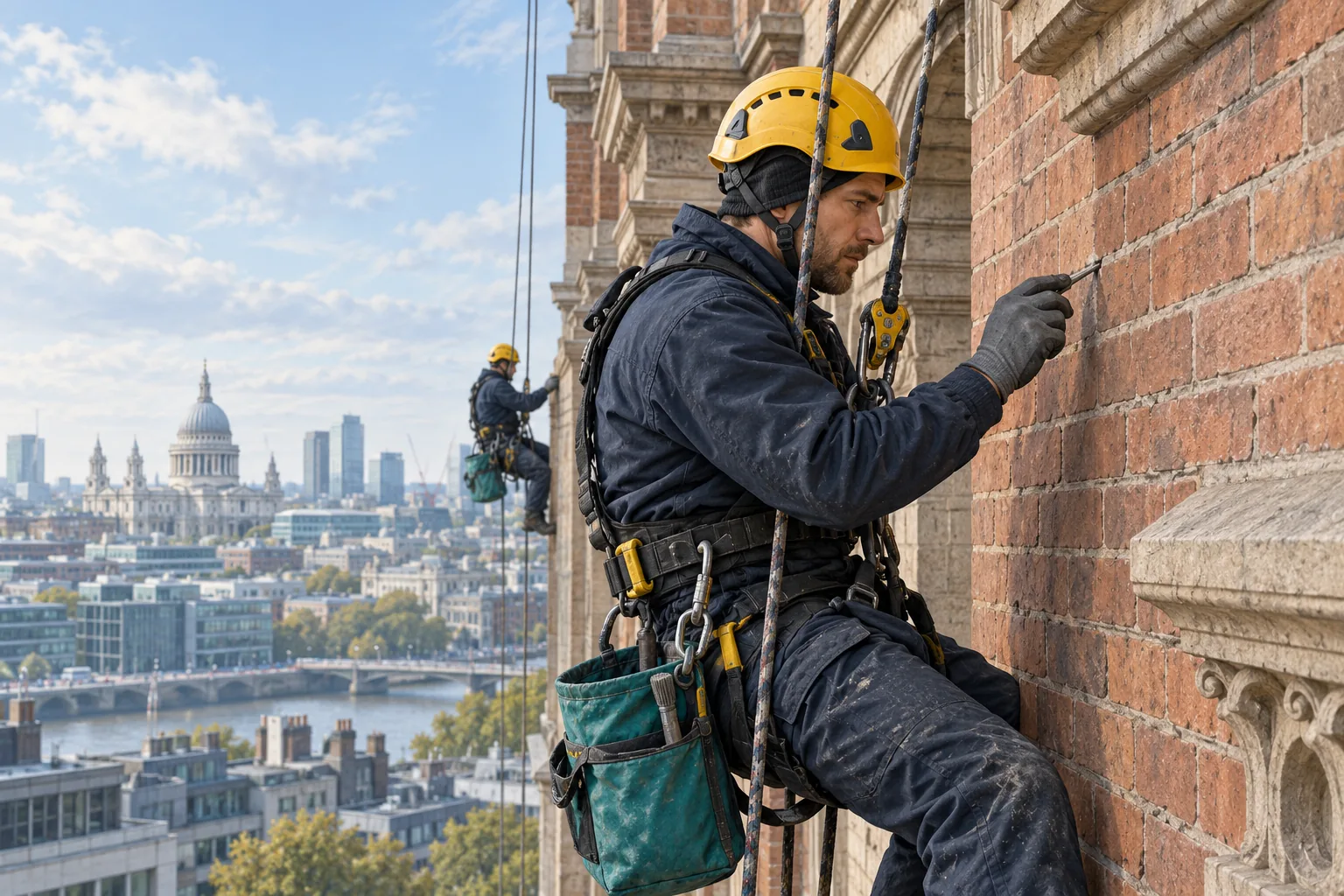
Some brickwork can be repointed using rope access or a suitable powered platform, but the building and the repair determine whether that is practical. Avoiding scaffolding should not take priority over the quality of the work or the means of carrying it out safely.
For an owner considering high-level repairs, the first question is which mortar joints need attention. The second is how a suitably experienced contractor can reach and repair them. A rope access qualification alone doesn't demonstrate expertise in repointing brickwork.
Which areas of brickwork need repointing?
A masonry assessment should identify the failing mortar joints and any damaged bricks. Mark the repair areas on an elevation or photographs before the access is priced.
Record failing mortar separately from spalling, where the face of a brick or stone breaks away. Damaged units may need repair or replacement as well as new pointing. The Historic England guide explains the scope assessment, preparation and protection stages for older walls.
Historic England's repointing guidance says comprehensive repointing of an older building is rarely necessary and sound historic mortar should be left undisturbed. It also warns that unsuitable repointing can damage masonry. Its advice is particularly relevant to older properties and historic brick or stonework.
Damp inside the building doesn't prove that every visible mortar joint needs replacing. Share the leak history and ask whether gutters, flashings or other defects need investigation alongside the brickwork.
When might rope access be appropriate?
Rope access may suit localised work on a high or awkward elevation, subject to assessment. The contractor needs to establish working positions, suitable anchors and arrangements for tools, mortar and waste. The area below must also be considered.
Spectrum describes scaffold-free chimney repointing among its restoration projects. For a similar proposal on your building, look for evidence of both rope access competence and the masonry repair, including the finished joints.
The quotation should identify the areas to be repaired and the proposed finish. Keep the repair specification attached to the access proposal so a change in method doesn't quietly change the work you are buying.
When could scaffolding be the better choice?
A scaffold may be more practical for extensive repointing, repeated access or work that includes brick replacement and other repairs. Consider the working space needed for preparation, application and protection of the new mortar.
The contractor should explain how the chosen method supports the whole repair process. Reaching the joint is only one consideration. Tools, materials, debris and weather conditions also affect the work. Compare the proposals using the same repair scope.
Our rope access versus scaffolding guide sets out the broader cost and programme questions.
Lime mortar, cement and the existing masonry
A masonry specialist should specify the pointing mortar for the existing brick or stone. Older buildings may need lime mortar compatible with their original construction. A dense cement mortar can be unsuitable for some historic masonry; the choice needs an assessment of the wall and earlier repairs, rather than a generic mix.
Agree the colour and texture of the new pointing as well as the joint profile. A sample area helps establish the finish before work spreads across an elevation. The repair specification should explain how defective old mortar will be removed while preserving sound joints and avoiding damage to the brick faces.
What does professional repointing involve?
The work includes assessment, removal of failed pointing, preparation of the joints, placement of the specified mortar and protection while it cures. A rope access proposal needs to allow for each stage, including repeat access where necessary. Reaching a joint once isn't enough to establish that the repair can be completed properly.
Preparation includes raking out defective mortar with tools suited to the masonry. Inappropriate power tools can damage the edges of joints, so the specification should explain how sound material will be protected. Debris collection and dust controls also need to work with the proposed access method.
Why protection matters when using lime
Fresh mortar needs protection while it cures. The contractor should explain how rain, drying conditions and the need for later checks affect the programme. A proposal to repoint a high wall must allow for that protection as well as the time spent applying mortar. This is one reason extensive repairs may favour a scaffold.
What should a brick repointing quotation include?
Where the building is listed or otherwise subject to restrictions, check the proposed work with the appropriate adviser before commissioning it. An access method that avoids scaffolding doesn't settle questions about permission to alter the building.
- The elevations and extent of repointing, with a plan or marked photographs.
- The repair specification, mortar and finish.
- Access, site protection, waste removal and any required permissions.
- The approach to additional defects found during work.
- Photographic records and completion checks.
- Programme assumptions, weather arrangements and VAT treatment.
A price per square metre is only useful when the measured area and preparation are clear. Ask whether replacing damaged bricks or addressing deeper defects is included. Keep optional repairs separately priced so you can make an informed decision.
Discuss high-level brickwork repairs
Send photographs of the joints, the building address and any survey findings with your brickwork repair enquiry. Include known heritage restrictions. We arrange introductions for building maintenance and repairs where an appropriate contractor is available; the contractor confirms the masonry specification and access.